
Georgia DOC Release Records
No state prison was identified as physically located in Elbert County for this project. Still, Elbert County felony sentences can send people to GDC facilities elsewhere in Georgia. Once GDC accepts a person, the statewide offender system becomes the main public source for state custody and later discharge. The county jail entry explains the local booking and transfer. It does not remain the controlling source for a later prison release.
GDC records may remain visible after a person leaves prison. Depending on the profile, the result can show a GDC ID, status, facility information, sentence data, sentence start, maximum release date, and tentative parole month. A parole record may add post-release context. These are state fields. They should not be mixed with the county jail’s Current Inmates or last-24-hour booking views.
Find Georgia DOC Releases
Open the official GDC Find an Offender page, then proceed to the public query. Search by the strongest known identifier. A GDC ID is more precise than a common name, but name and physical details can narrow the result when no number is known.
- Enter the person’s name or available GDC identifier.
- Compare matching profiles using identifying details.
- Open the correct record and read current status or facility.
- Review sentence dates, maximum release date, and parole fields separately.
- Use Board sources if a tentative parole month or parole action appears.
- Request GDC records when the public profile lacks the needed discharge detail.
A current facility indicates state custody, not release. A released, discharged, inactive, or comparable state status can support the conclusion that prison custody ended, but the exact wording and date still matter. The Elbert County release search guide covers the earlier county booking and court trail when the case crossed systems.
Georgia Offender Search Fields
Read dates by label. A maximum release date is an outside sentence field, not a guaranteed pickup time. A tentative parole month, often shortened to TPM, is a parole milestone for an eligible person. It is not the same as a fixed release date. Parole is discretionary in Georgia, which means the State Board of Pardons and Paroles makes an individual decision for an eligible state inmate.
| GDC field | Meaning |
|---|---|
| GDC ID and name | Identifies the state offender record. |
| Status or facility | Shows the state custody setting reported by GDC. |
| Sentence information | Connects offenses and terms to state custody. |
| Maximum release date | The outside date shown under the current calculation, not a promised release day. |
| Tentative parole month | A Board parole milestone that can change. |
Georgia does not have one universal statement that every inmate serves the same fixed share of a sentence. Eligibility and required service depend on the offense, sentence, date, statute, and Board rules. Some serious offenses carry strict limits. Check the actual profile and official parole material instead of applying a broad percentage.
GDC Records and Contact
The public offender query is the fastest state lookup, while GDC offender-information pages provide the records route. A focused inquiry should identify the person by name and GDC ID where known, state the exact discharge or sentence field needed, and explain the record period. Do not route a county-only bond release to GDC. That event belongs with the Elbert County sheriff and court.
Georgia state custody sources
Georgia Department of Corrections
Offender information and records
Public offender query
Inmate TPM lookup
The public system is statewide, so there is no Elbert-only prison search. When the profile shows parole, use the State Board of Pardons and Paroles for the decision process and parolee database. When it shows ongoing community supervision, DCS handles field supervision. Each agency maintains a different part of the release path.
Why Georgia Release Dates Move
Several events can change a projected state release path. GDC may update sentence calculations, credits, or facility status. A court can change a sentence or credit. Disciplinary action can affect credits. A warrant, detainer, or hold can prevent community release even when one sentence reaches a milestone. The parole board can grant, deny, delay, reconsider, rescind, or otherwise change parole timing.
The maximum release date and TPM therefore serve different purposes. The maximum date reflects the state sentence calculation shown in the profile. The TPM reflects a tentative parole point created through the Board process. Neither should be stated as the certain day the person walks out. For a precise official history, combine the GDC profile, Board action, and any relevant court order.
Georgia DOC Release Image
The official GDC public offender query shows the state search route used for a person who entered Georgia prison custody.
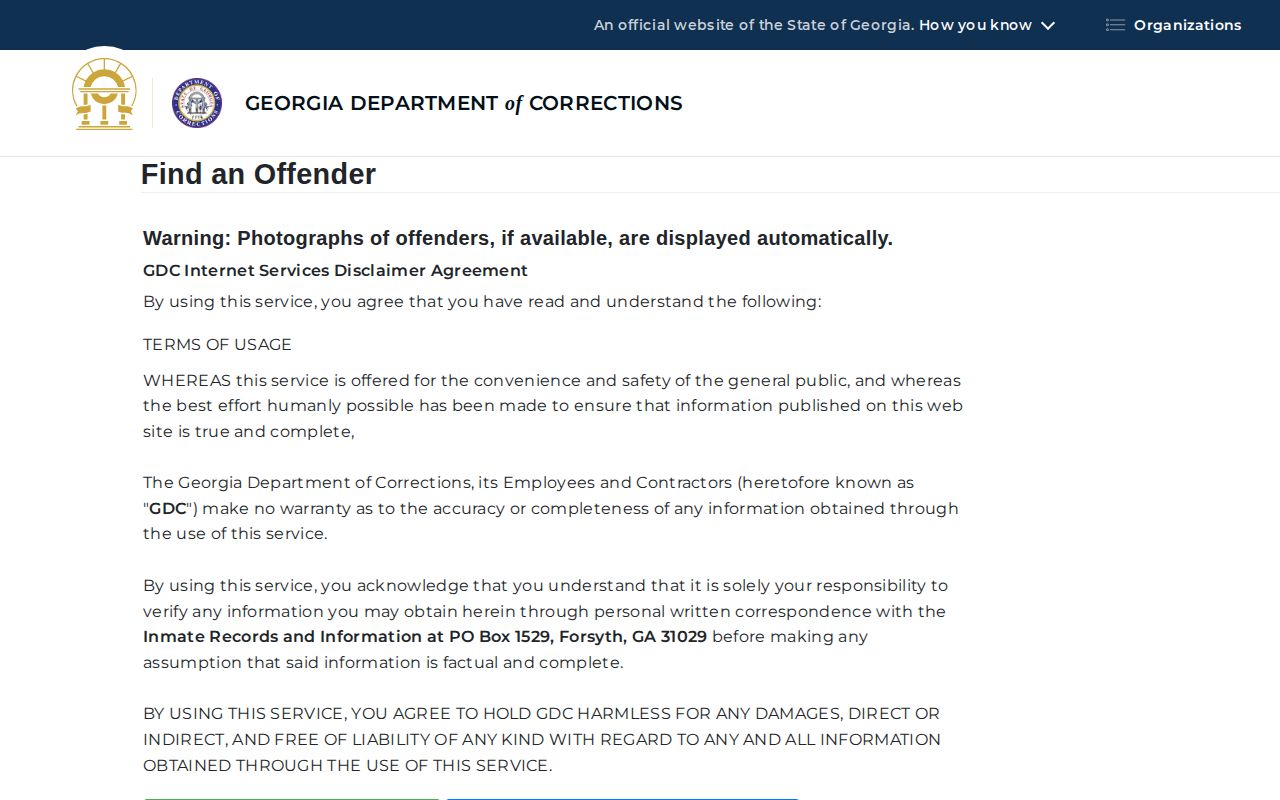
This image is relevant only to GDC custody. Someone who left the Elbert County jail after bond or a short local event may never have a GDC profile. In that case, use the sheriff’s jail docket and court record.
Elbert Transfers into GDC
A person can disappear from the county Current Inmates tab because GDC accepted a state transfer. The county discharge or removal field should document the local departure. The state record then documents the next custody stage. Treat the two records as a timeline rather than competing answers.
If a federal or ICE hold appears, GDC may not be the next system at all. Use BOP for a person who entered federal prison custody and the ICE locator for an adult in immigration detention. The Elbert sheriff’s immigration reports make detainers a real local issue, but those reports do not replace a named-person record. Confirm each handoff with the agency that held the person at that stage.