
Elbert Detention Release Paths
The Elbert County Detention Center is the county jail. It holds people booked on local charges and people kept for other authorities. Leaving its roster can mean release on bond, release on recognizance, dismissal, time served, sentence completion, a court order, or an administrative release. It can also mean a transfer. A person may move to another county, the Georgia Department of Corrections, a court or treatment program, federal custody, or immigration custody. Those outcomes are not equal. Only the jail discharge record can identify the date and authority by which the local custody ended.
Georgia law requires the jailer to keep a docket or register. Under O.C.G.A. § 42-4-7, that record includes the person’s name, age, sex, residence, charged offense, issuing authority, entry date, and the date and authority of discharge. It also records a removal date when the person is removed from the jail. Ask for the relevant jail docket entry or booking-and-release sheet when the public screen does not settle the question. That record separates a true release from a simple absence on the current list.
Confirm Elbert Detention Releases
Use the sheriff-linked Elbert County Offender Index as the first check. Search the Current Inmates tab by first and last name. A match points to current county custody. No match calls for more work because spelling, a transfer, a fast release, or a different custody system may explain the absence.
- Search Current Inmates with the full name and a spelling variation.
- Open Inmates Sorted by Booking Date and choose the likely booking period.
- Select “Include Previous Inmates In Search” when the option is available.
- Compare the arrest date, status, charges, bond, and court with known facts.
- Request the jail docket entry if no public field gives the discharge date and authority.
The tab called “Bookings Made in the Last 24 Hours” is a booking feed, not a list of people released. It may show someone who was booked and remains confined. Conversely, a former inmate may be found only through the booking-date search. The broader Elbert County released-inmate search and records guide explains how court, VINE, state, and federal sources fit around this county check.
Elbert Jail Roster Fields
The public row can show useful clues even when it does not certify release. Its configured fields include name, status, sex, height, weight, address, arrest date and time, days in jail, and total bond. Expanded charge information may include a warrant number, charge, type, statute, count, and court. A bond amount means bond is tied to the booking. It does not mean the bond was posted or that release occurred.
| Field or view | What it can establish |
|---|---|
| Current Inmates | The county source presently lists the person in local custody. |
| Booking-date search | A current or former booking may be found by date and name. |
| Status and days in jail | Custody context for the visible record, not a certified discharge. |
| Total bond | Bond information connected to the booking, not proof of bond-out. |
| Jail docket discharge fields | The official date and authority for discharge or removal. |
The page template has a photo slot, but Elbert County’s public configuration has photos turned off. Do not treat a blank photo area as evidence about identity or release. Use the text fields to match a record and ask the sheriff for the official record needed.
Elbert Release Records Contact
Physical custody and administrative records use two addresses in the official county sources. The county public-safety directory lists the detention center at 26 West Church Street. The sheriff contact page lists the administrative office at 47 Forest Avenue. This distinction matters. A person may leave the jail building, while an open-records request is routed through the Sheriff’s Office.
Facility and records route
Elbert County Detention Center
26 West Church Street
Elberton, GA 30635
Elbert County Sheriff’s Office
47 Forest Avenue
Elberton, GA 30635
706-283-2421
Identify the person, approximate booking date, and the exact fields sought. A focused request might ask for the booking-and-release sheet, jail docket entry, discharge date, discharge authority, and removal destination if recorded. Georgia Open Records Act procedures and lawful fees are governed generally by O.C.G.A. § 50-18-71, while exemptions may apply under § 50-18-72. Ask the custodian for the current cost and method. The research does not support a fixed fee, a fixed response hour, or a promise of same-day production.
Where Elbert Releases Go
A direct community release may follow bond, a court order, time served, sentence completion, or another valid authority. The docket should show that local discharge. Court records can then explain the cause. A bond order, sentence, dismissal, probation order, revocation decision, or other disposition may outlast the online jail entry. Use the Elbert County courts directory to identify the right court, or use Georgia’s e-access entry point when online access applies.
A state transfer is different. Once GDC accepts the person, the county roster no longer controls the current status. Search the GDC offender system for the GDC ID, state status, facility, sentence information, maximum release date, or tentative parole month. A later state-prison release belongs to GDC and parole records, not to the Elbert County jail’s recent-booking tabs. If supervision follows, the State Board of Pardons and Paroles and Department of Community Supervision become relevant.
Federal and immigration transfers need their own locators. A federal hold may lead to a federal court record, U.S. Marshals custody, or later BOP custody. An ICE detainer can lead to immigration detention. In each case, the county docket confirms departure from the jail, while the receiving authority confirms what happened next.
Elbert ICE Transfer Records
Elbert County has a specific reason to address immigration transfers. The sheriff’s helpful-links page posts Criminal Alien Track and Report Act quarterly reports. Those reports show that immigration reporting is part of the local public-information setting. They are not a named-person release archive and should not be read as one.
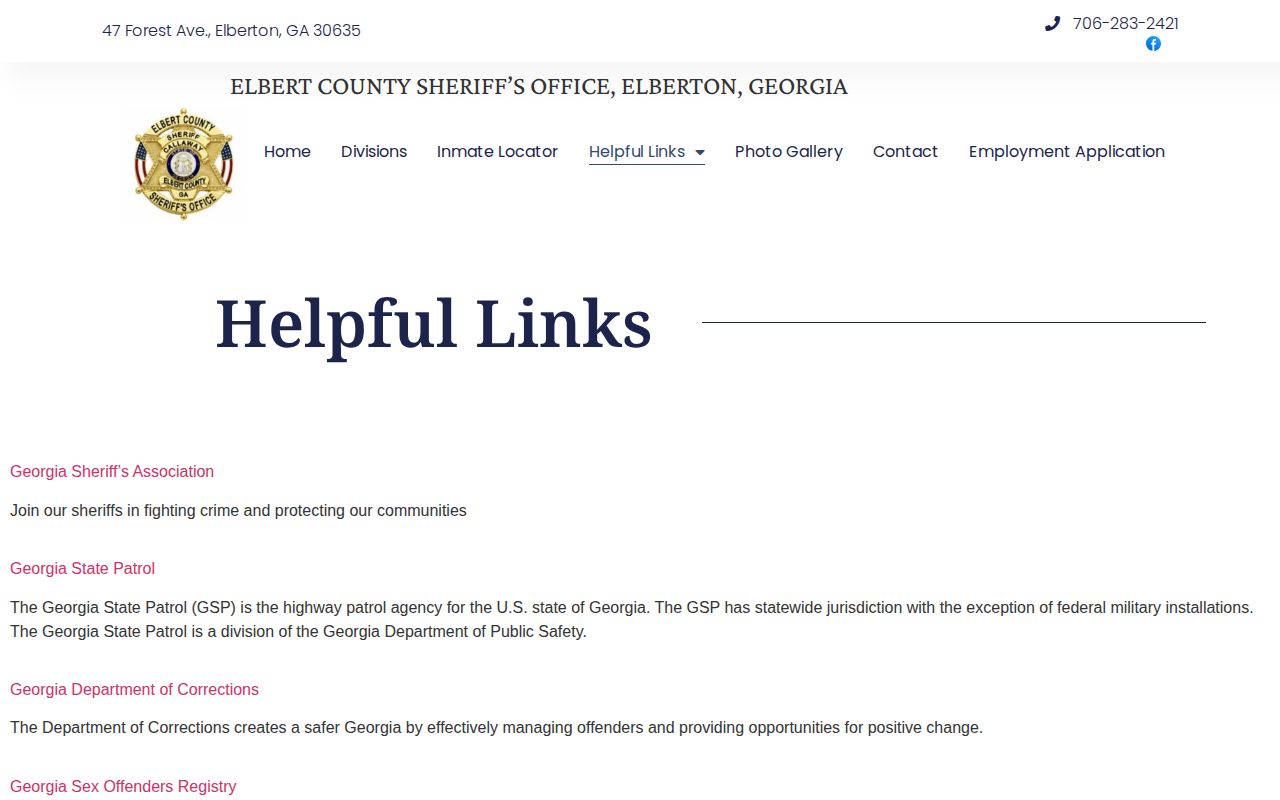
If a jail entry shows an ICE hold or transfer, leaving West Church Street is not the same as release to the community. Search the ICE Online Detainee Locator System for an adult believed to be in ICE detention. Pair that result with the sheriff’s discharge or removal record and any court entry. If ICE does not hold the person, that absence still does not establish the exact county release date.
Two Elbert Release Addresses
The separate jail and Sheriff’s Office addresses are more than directory trivia. The detention center is the custody location listed by the county, while the Forest Avenue office is the published administrative and open-records contact. Sending a request to the wrong place can slow a precise answer. Start with the sheriff contact path and let the office route the request if another custodian holds the file.
Phone inquiries should also stay precise. Ask whether the person is presently in the Elbert County Detention Center, whether a release or transfer entry exists, and which office can provide a copy. Staff may limit what they confirm by phone. A written record is stronger when the date, authority, or destination matters. If a court action caused the release, request the matching order from the proper clerk because the sheriff and clerk keep different parts of the event.